Today is Monday 15th October 2007 and the first day after the end of the so called "phony election campaign." The PM has finally done the deed and after calling on the Governor General called for the end of the current Parliament and new elections.
In the opening salvo of this campaign the aspirant to the position of PM - Kevin Rudd has made another of those speeches that are starting to give me chills. He talks about a "New Leadership" and talks about "Working Families" and he talks about the plans he will disclose during the campaign.
Why the chills?
Well in the first place - we are not as yet sure about WHO will provide this new leadership that he talks about. In the second place I would like to start to hear something about people like ME - those who have laboured hard for the last forty + years to enable politicians to talk about their 'successes' and who are now in retirement. Were it not for the massive numbers of people in the so called "Baby Boomer" generation who are now ready for retirement there would not BE the 33 year lows in unemployment. It is WE who by retiring have made way for those masses of young people who have been unable to get employment. It certainly has not been government.
Those involved in the business community have managed to take most of their means of production overseas to ANY country that has lower wages bills and fewer conditions of employment.
Meanwhile of course what the current government has done is to introduce a system of industrial relations that is based purely on greed! For the business community it has meant the opportunity to break the power of unionised labour and for those people who are well educated and with skills and/or knowledge to sell an opportunity to secure contracts of service (ie AWAs) that have some hope of making them rich (at least in the short term).
Meanwhile what of the baby boomers who are entering or have already entered retirement?
Who cares! They are past it! They have made their contributions and while they can still vote they are the people who present more of a problem than anything else. After all they had their chance to put together their nest eggs and now it's the turn of someone else.
My criteria for deciding WHO is to be elected - like those for many others in the community will, I suspect be increasingly selfish as the campaign heats up.
I for one will take MY projected needs over the next three years and ask who in government is most likely to do the things that will make MY life bearable!
With prices rising and my illness making it virtually impossible for me to return to the work force if I need to, the number of options about how I can maximise the "what's in it for ME" option, will help to determine the direction of MY vote.
Alas, I live in an electorate in which I am for all practical purposes disenfranchised!
The incumbent happens to belong to a party that has held the electorate for decades and as a result unless there has been a funny and major change to the demographics the nature of the vote is unlikely to change.
The so called "marginal seats" a lot of which appear to be in Queensland, will be interesting.
Queensland is a state in which there have been major demographic changes with lots of people from among the baby boomers seeking out the milder climactic conditions for retirement. The question is - whether they now would continue to support a party that they MAY have voted for all their lives - Labour - knowing that they are no longer part of working families and are really part of the generation that is seeking to have the next few years in the sun able to enjoy their retirement.
Who will offer them the best deal?
Is it Rudd with his promises of plans that may or may not work or something tried and true that will at least maximise investments that are the backbone of superannuation funds!
THAT I suspect is where the answers will come in this election. Of course the media may well manage to change perceptions and actually convince these old codgers that promises of plans will necessarily equate to dollars in the bank.
Let's wait six weeks and see.
Monday, October 15, 2007


Saturday, October 06, 2007
The Good Old Days - Where are they now?
A Slice of History
1971
Australia's population is 12,755, 638 at the time of the 1971 Census. A total of 2,579, 318 born overseas (20 per cent of the population).
People from the United Kingdom (and Republic of Ireland) are the largest group (1,088,210), followed by Italians (289, 476) and Greeks (160 200).
The largest humanitarian group the Poland-born, who mainly arrived as Displaced Persons after the War totals 59, 700.
1973
In January, the new Whitlam Government announces that future immigration policy would not distinguish between immigrants on the basis of race, colour or nationality. The White Australia Policy is finally abolished. The implications of this new policy for refugees are not tested until 1975, with refugee crises in East Timor and Vietnam.
In September, a military coup in Chile overthrows the socialist government of Salvadore Allende, and Australia takes in Chilean refugees. The Chilean program has bipartisan support and marks a break from previous refugee programs that tended to support refugees who were fleeing Communist governments. Between 1974 and 1981, about 6000 Chileans are taken in and, thereafter until the ending of military rule in 1990, hundreds continue to be admitted each year as part of either the Special Humanitarian Program (introduced in 1981) or family reunion program. The Chilean population in Australia increases from 3760 at the 1971 census to 24 042 in 1991
1974
The Department of Immigration is disbanded and a Department of Labour and Immigration established by the Whitlam Government. Hon. Clyde Cameron MP succeeds Grassby as Minister in June.
Displaced persons from Cyprus are admitted after the Turkish occupation of northern Cyprus. The Cypriot population in Australia increases from 13 267 at the 1971 census to 21 629 in 1976
1975
The defeat of United States-backed regimes in Vietnam is accompanied by massive displacement of Vietnamese people from their homes. Refugees flee to Malaysia, Indonesia, Thailand, Hong Kong and the Philippines.
Violent civil war in East Timor in August 1975 produces a wave of about 2500 evacuees to Darwin. About 700 agree to go to Portugal but the remaining group, which includes families without breadwinners, the elderly and unaccompanied children, are accommodated in Commonwealth Government hostels in Sydney and Melbourne. The December invasion of East Timor by Indonesian military forces leads to widespread resistance and guerilla warfare that lasts until independence is achieved in 2002. Throughout the 25-year struggle, a continuous flow of Timor-born people seek refuge in Australia. At the 1996 census there are an estimated 9200 Timorese born people in Australia.
The Migrant Service Section, together with the TIS (Telephone Interpreter Service) provides outreach services to these refugees at the Commonwealth Hostels.
Social Workers, Welfare Officers and Interpreters are sent to the Hostels on a sessional basis where these people are housed, to offer them information about what is available to them in terms of income support, housing and other services in the community .
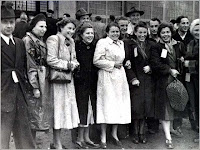
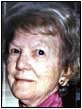 Headed by EVA BYRNE Former Board member, Good Neighbour Council of NSW; former Principal Social Worker, Settlement Services, Department of Immigration; and former honorary consultant to ECC of NSW and to FECCA. and ably supported by Nina Skoroszewski (nee Antonina Libiszowska), herself passenger no. 1060 on the wharf Bremerhaven, waiting to board the transport "Delmenhorst" for Australia. 31 August 1950.
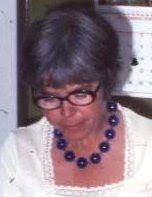 (When she was working for the Department of Immigration she looked a little older.)
In December, following the general election, the Fraser Liberal Government establishes a new Department of Immigration and Ethnic Affairs, with Hon. Michael Mackellar MP as Minister.
1976
In May, Minister Mackellar invites the Timorese who were admitted at the end of 1975 to apply for resident status. More than a thousand take up the offer.
Civil war in Lebanon results in the deaths of 50, 000 people and displacement of about 600,000 Lebanese and 150, 000 Palestinians from Lebanon. The Australian Embassy in Beirut is evacuated in March. Visas are granted to any relatives of Australian residents who have suffered extreme hardship as a result of the war, provided they meet health and character requirements. In the first half of 1976, more than 800 Lebanese are admitted. The flow continues with the worsening war and by 1981 the Lebanon-born community has increased
by more than 16, 000. Funding is provided to assist Lebanese community organisations to set up services for their communities. There are a number of new social workers and welfare
officers employed to provide appropriate culturally sensitive services to this new group of arrivals.
1978
The Galbally Report the Review of Post-Arrival Programs and Services to Migrants is tabled in Parliament in May. The Fraser Government announces expenditure of $49.7 million on migrant services (English language teaching, initial settlement services, ethnic media, establishment of an Institute of Multicultural Affairs, and others) over three years to implement Galbally's recommendations.
Acting on the report, the Government establishes Migrant Resource Centres, reshapes the Adult Migrant Education Program, provides grants for migrant welfare workers, establishes the Institute for Multicultural Affairs and expands the Telephone Interpreter Service.
Comment:
What was I think quite unique both for the time and for this country was the nature of the people who worked in this team. For the most part they were social workers, welfare officers and general clerical staff who were representative of the ethnic and language mix that either had or was arriving in this country.
There were people from various backgrounds:- Italian, Greek, Turkish, Cypriot, Maltese, Lebanese, Hungarian, Serbian, Croatian, Macedonian, Irish, Welsh, English, Australian, Scottish, Egyptian, Timorese, Ethiopian, Chilean, Chinese, Malaysian, and many other nationalities.
Where are they now when we have settlement issues with people who are from very very different ethnic an cultural backgrounds?
It's all very well to blame those who arrive for not settling into the Australian community however it would be just as well for the current Minister to consider that every time he points a finger at someone - there are three curled fingers pointing right back at himself.
1971
Australia's population is 12,755, 638 at the time of the 1971 Census. A total of 2,579, 318 born overseas (20 per cent of the population).
People from the United Kingdom (and Republic of Ireland) are the largest group (1,088,210), followed by Italians (289, 476) and Greeks (160 200).
The largest humanitarian group the Poland-born, who mainly arrived as Displaced Persons after the War totals 59, 700.
1973
In January, the new Whitlam Government announces that future immigration policy would not distinguish between immigrants on the basis of race, colour or nationality. The White Australia Policy is finally abolished. The implications of this new policy for refugees are not tested until 1975, with refugee crises in East Timor and Vietnam.
In September, a military coup in Chile overthrows the socialist government of Salvadore Allende, and Australia takes in Chilean refugees. The Chilean program has bipartisan support and marks a break from previous refugee programs that tended to support refugees who were fleeing Communist governments. Between 1974 and 1981, about 6000 Chileans are taken in and, thereafter until the ending of military rule in 1990, hundreds continue to be admitted each year as part of either the Special Humanitarian Program (introduced in 1981) or family reunion program. The Chilean population in Australia increases from 3760 at the 1971 census to 24 042 in 1991
1974
The Department of Immigration is disbanded and a Department of Labour and Immigration established by the Whitlam Government. Hon. Clyde Cameron MP succeeds Grassby as Minister in June.
Displaced persons from Cyprus are admitted after the Turkish occupation of northern Cyprus. The Cypriot population in Australia increases from 13 267 at the 1971 census to 21 629 in 1976
1975
The defeat of United States-backed regimes in Vietnam is accompanied by massive displacement of Vietnamese people from their homes. Refugees flee to Malaysia, Indonesia, Thailand, Hong Kong and the Philippines.
Violent civil war in East Timor in August 1975 produces a wave of about 2500 evacuees to Darwin. About 700 agree to go to Portugal but the remaining group, which includes families without breadwinners, the elderly and unaccompanied children, are accommodated in Commonwealth Government hostels in Sydney and Melbourne. The December invasion of East Timor by Indonesian military forces leads to widespread resistance and guerilla warfare that lasts until independence is achieved in 2002. Throughout the 25-year struggle, a continuous flow of Timor-born people seek refuge in Australia. At the 1996 census there are an estimated 9200 Timorese born people in Australia.
The Migrant Service Section, together with the TIS (Telephone Interpreter Service) provides outreach services to these refugees at the Commonwealth Hostels.
Social Workers, Welfare Officers and Interpreters are sent to the Hostels on a sessional basis where these people are housed, to offer them information about what is available to them in terms of income support, housing and other services in the community .
 Headed by EVA BYRNE Former Board member, Good Neighbour Council of NSW; former Principal Social Worker, Settlement Services, Department of Immigration; and former honorary consultant to ECC of NSW and to FECCA. and ably supported by Nina Skoroszewski (nee Antonina Libiszowska), herself passenger no. 1060 on the wharf Bremerhaven, waiting to board the transport "Delmenhorst" for Australia. 31 August 1950.
 (When she was working for the Department of Immigration she looked a little older.)
In December, following the general election, the Fraser Liberal Government establishes a new Department of Immigration and Ethnic Affairs, with Hon. Michael Mackellar MP as Minister.
1976
In May, Minister Mackellar invites the Timorese who were admitted at the end of 1975 to apply for resident status. More than a thousand take up the offer.
Civil war in Lebanon results in the deaths of 50, 000 people and displacement of about 600,000 Lebanese and 150, 000 Palestinians from Lebanon. The Australian Embassy in Beirut is evacuated in March. Visas are granted to any relatives of Australian residents who have suffered extreme hardship as a result of the war, provided they meet health and character requirements. In the first half of 1976, more than 800 Lebanese are admitted. The flow continues with the worsening war and by 1981 the Lebanon-born community has increased
by more than 16, 000. Funding is provided to assist Lebanese community organisations to set up services for their communities. There are a number of new social workers and welfare
officers employed to provide appropriate culturally sensitive services to this new group of arrivals.
1978
The Galbally Report the Review of Post-Arrival Programs and Services to Migrants is tabled in Parliament in May. The Fraser Government announces expenditure of $49.7 million on migrant services (English language teaching, initial settlement services, ethnic media, establishment of an Institute of Multicultural Affairs, and others) over three years to implement Galbally's recommendations.
Acting on the report, the Government establishes Migrant Resource Centres, reshapes the Adult Migrant Education Program, provides grants for migrant welfare workers, establishes the Institute for Multicultural Affairs and expands the Telephone Interpreter Service.
Comment:
What was I think quite unique both for the time and for this country was the nature of the people who worked in this team. For the most part they were social workers, welfare officers and general clerical staff who were representative of the ethnic and language mix that either had or was arriving in this country.
There were people from various backgrounds:- Italian, Greek, Turkish, Cypriot, Maltese, Lebanese, Hungarian, Serbian, Croatian, Macedonian, Irish, Welsh, English, Australian, Scottish, Egyptian, Timorese, Ethiopian, Chilean, Chinese, Malaysian, and many other nationalities.
Where are they now when we have settlement issues with people who are from very very different ethnic an cultural backgrounds?
It's all very well to blame those who arrive for not settling into the Australian community however it would be just as well for the current Minister to consider that every time he points a finger at someone - there are three curled fingers pointing right back at himself.
Wednesday, October 03, 2007
A Refugee Issue? Hype or just plain ignorance?

He says that is one of the reasons the Federal Government decided in August to reduce the intake of African refugees from 70 per cent to 30 per cent over the last two years, in favour of increased numbers from the Middle East and Asia."
The Ethnic Communities Council has slammed the Federal Government's decision to cut the intake of African refugees into Australia, the council's chair Phong Nguyen says deciding to cut the refugees on those grounds is shocking.
"It departs from convention and also from the commitments that all nations had with the United Nations towards refugees," he said.
"That they will take them based on need and not based on how well these people will settle in the new country."
These are excerpts from articles on the ABC NEWS
This is likely to become an interesting debate.
I guess there are at least two questions I would like to ask before we descend into an arena of hype and over-reaction:
- What (if any) rights do countries who are signatories to various agreements about refugees have in selecting from the millions of people who have been classified as refugees by the UNHCR?
- What if any rights do refugees have in selecting the country that they would like to settle in?
If refugees have "rights" to stipulate the country in which they would like to be settled then let's see where this has been agreed and what those rights are.
If countries have a right to determine the nature and the number of refugees that they welcome into their countries, then let's hear what has been agreed and what those rights are.
Once these matters have been exposed to a public airing THEN I suspect we will be in a position to make informed comment.
Until then we are at risk of making ignorant comments. Would anyone care to provide some information about these matters?
Tuesday, October 02, 2007
Chocolate is GOOD for you
We have often heard about the pleasure that is gained when eating chocolate but the latest news on the subject from the UK is - at least for me - something to bring a cheer into my day.
see http://news.bbc.co.uk/1/hi/health/7018055.stm
I now have MEDICAL advice that chocolate in moderation is good for me - so I am off to buy some!
see http://news.bbc.co.uk/1/hi/health/7018055.stm
Chocolate 'aids fatigue syndrome'A daily dose of specially-formulated dark chocolate may help cut chronic fatigue syndrome symptoms.
 The reduction was small but "noteworthy", researchers say
Researchers from Hull York Medical School said the results were surprising but dark chocolate may be having an effect on the brain chemical serotonin.Do I need to know more than this? Not really! Who cares if it all turns out to be an advert for Nestle or Cadbury or one of the other Swiss or Belgian chocolate giants? Not me!Polyphenols
Professor Atkin said he was very surprised at the strength of the results.
"Although it was a small study, two patients went back to work after being off for six months."
He explained: "Dark chocolate is high in polyphenols, which have been associated with health benefits such as a reduction in blood pressure.
"Also high polyphenols appear to improve levels of serotonin in the brain, which has been linked with chronic fatigue syndrome and that may be a mechanism."
He added that although more research was needed to confirm the findings, patients would not do themselves any harm by eating small amounts of dark chocolate and no-one in the study put on any weight.
I now have MEDICAL advice that chocolate in moderation is good for me - so I am off to buy some!
Subscribe to:
Posts (Atom)


